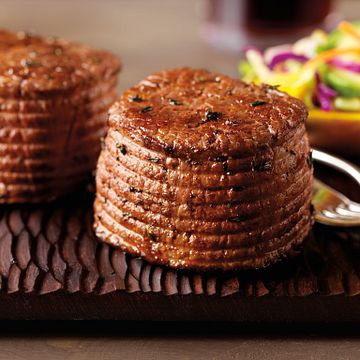
Treat yourself to these beef steaks rubbed with a Mexican-flavored mixture of fresh thyme and ancho chili served with a fresh homemade cabbage, mango and avocado slaw.
To prepare Slaw, combine lime juice, salt and chile powder in small bowl; gradually whisk in oil until blended. Set aside. Combine remaining slaw ingredients in large bowl. Add dressing; toss gently to coat. Let stand while preparing beef or refrigerate, covered, up to 4 hours.
Preheat oven to 350°F. Combine Rub ingredients; press evenly onto beef Ribeye Filets. Heat heavy, ovenproof, nonstick, skillet over medium heat until hot. Place filets in skillet and brown 2 minutes; turn filets over and place skillet into preheated oven.
Cook in 350°F oven 20 to 24 minutes for medium rare; 25 to 28 minutes for medium doneness. Remove from oven when internal temperature reaches 135°F for medium rare; 150°F for medium. Transfer filets to carving board; tent loosely with aluminum foil. Let stand 5 to 10 minutes. (Temperature will continue to rise about 10°F to reach 145°F for medium rare; 160°F for medium.)
Carve filets into slices; serve with slaw.
Test Kitchen Tips It’s not a good idea to cut into a steak or burger to see if it’s done. You’ll lose juices and risk drying out the meat. Instead, rely on your thermometer to tell you when it’s done.